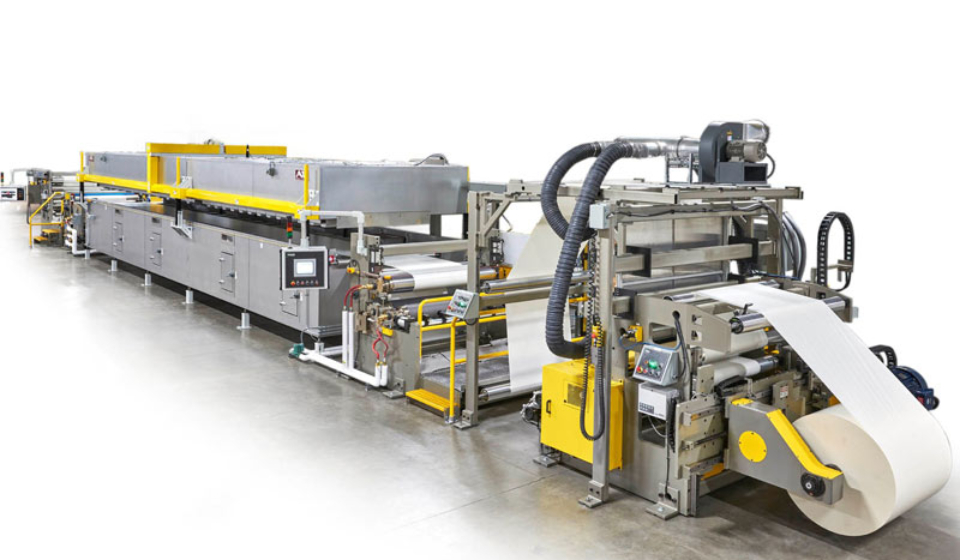
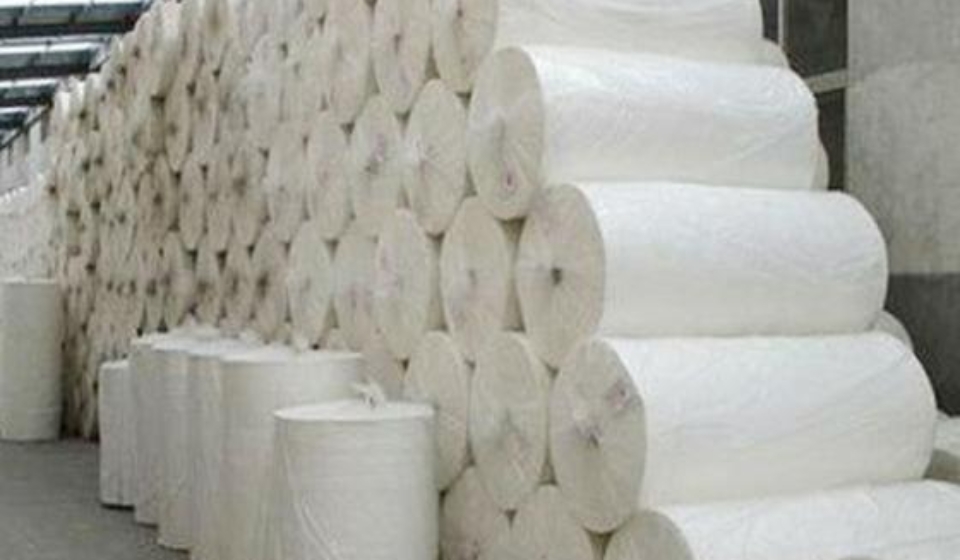
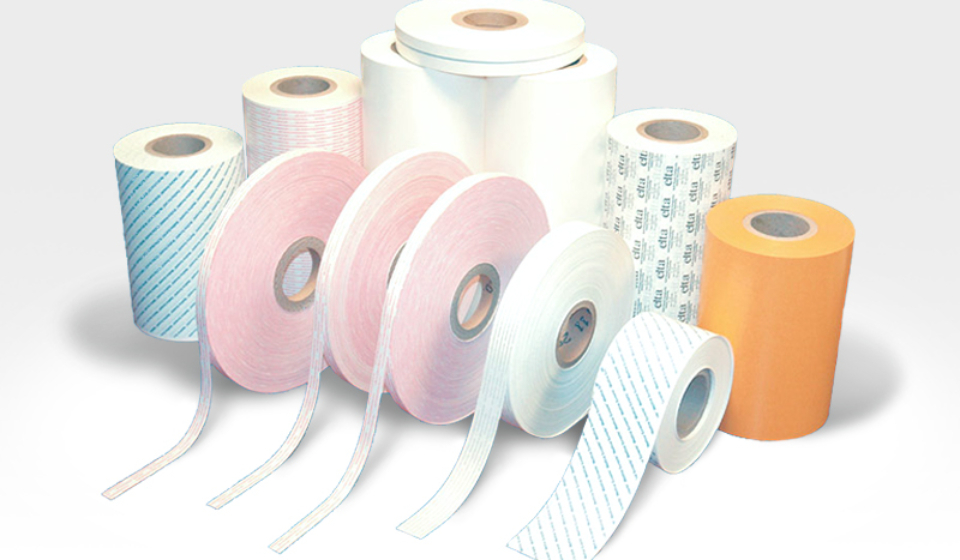
Adiambe CCK release paper is available in widths from 15 mm up to 2100 mm – the widest coating width currently offered in India. Order quantities are manufactured to specification. Contact us with your GSM, width, coating side, and volume requirement, and we will revert within one business day.
What industries use CCK release paper?
CCK release paper is used across self-adhesive labelling, adhesive tape manufacturing, medical and hygiene products, sticker and decal printing, and industrial foam, rubber, and gasket applications.
Why choose CCK over glassine release paper?
CCK release paper offers a broader GSM range (55–135 GSM) and is typically more economical for general-purpose and high-volume industrial release applications. Glassine is preferred when the application needs a smoother, more transparent surface or stronger grease and moisture barrier properties, such as food or pharmaceutical packaging. Many converters use both depending on the end product.
Is CCK release paper single or double-side coated?
Standard CCK release paper is single-side silicone coated. Double-sided coating can also be accommodated depending on specification – contact us with your requirement to confirm feasibility for your GSM and application.
What GSM range is CCK release paper available in?
Adiambe manufactures CCK release paper across a broad range from 55 to 135 GSM, giving converters flexibility to match liner weight and stiffness to their specific label, tape, or industrial application.
What is CCK release paper?
CCK (clay-coated kraft) release paper is a silicone-coated release liner made from clay-coated kraft base paper. It offers a smooth, uniform surface and consistent silicone release performance, making it a widely used liner for self-adhesive labels, tapes, and industrial applications.
What information should I share for a quote?
Share the thickness in micron, width, coating side, packaging preference, application, and expected quantity. For high-performance use cases, include adhesive type and converting process details as well.
What packaging options are available?
The listed packaging formats are roll, box, bundle, and pallet. The right format depends on slit width, order quantity, handling requirements, and shipping destination.
Is single-side and both-side coating available?
Yes. The polyester release film range is available with single and both-side coating options across the listed thickness grades.
Is metalized polyester release film available?
Yes. A 19 micron metalized polyester release film grade is listed, with key features including ultra-thin structure, excellent barrier properties, and high strength.
What thicknesses are available?
Adiambe Polyester Release Film is available in 19 micron metalized, 19 micron, 23 micron, 36 micron, 50 micron, 75 micron, 100 micron, and 125 micron grades.
What is polyester release film?
Polyester Release Film is a PET-based release film used where a plastic film liner is preferred over paper. It is commonly used for labels, tapes, holograms, medical and hygiene applications, packaging, and industrial adhesive applications.
What details should I share for a quote?
Share the required GSM, width, coating requirement, roll or sheet format, expected quantity, and end-use application. This helps Adiambe recommend the right MGK grade for your machine and application.
How is MGK different from CCK or Glassine release paper?
MGK is a machine-glazed kraft paper with one glossy side and is positioned for hygiene and medium-duty applications. CCK covers a wider GSM range for labels, tapes, medical, and industrial uses, while Glassine is a super-calendered release paper preferred for premium labels, food, pharma, and barrier applications.
Is MGK release paper suitable for sanitary pad machines?
Yes. The product document specifically notes MGK Release Paper for hygiene industries and high-speed sanitary pad machine use. Its strength, flexibility, smooth surface, and consistent finish support stable machine processing.
What widths are available?
MGK Release Paper is available in widths from 15 mm up to 1550 mm, making it suitable for narrow slit rolls as well as wider converting requirements.
What GSM grades are available in MGK release paper?
Adiambe MGK Release Paper is available in 40 GSM, 35 GSM, and 29 GSM. The corresponding thicknesses are 50 ± 3 micron, 45 ± 3 micron, and 38 ± 3 micron respectively.
What is MGK release paper?
MGK release paper is a machine-glazed kraft paper with one glossy side. It is used where a smooth surface, good flexibility, cost efficiency, and stable medium-duty release performance are required, especially in hygiene industry applications.
What details should I share for a quote?
Share your GSM, width, coating side, end-use application, and order volume so Adiambe can match the correct Hawana grade to your requirement.
Why choose Hawana release paper for industrial use?
Hawana is an economical and durable option for bulk industrial applications. It offers reliable release performance, flexibility, good durability, and high-temperature resistance.
What widths can be supplied?
Hawana Release Paper is available in widths from 15 mm up to 2100 mm, supporting both narrow slit roll and wide-roll requirements.
Is single-side and double-side coating available?
Yes. Hawana Release Paper is available with both single-side and both-side coating, depending on the end-use requirement.
Which GSM grades are available?
Adiambe Hawana Release Paper is available in 90 GSM and 80 GSM. The 90 GSM grade has a thickness of 78 ± 4 micron, while the 80 GSM grade has a thickness of 70 ± 5 micron.
What is Hawana release paper?
Hawana Release Paper is a brown kraft release paper used for adhesive tapes, industrial labels, packaging, wrapping, foam, rubber, gasket, and pharmaceutical-related applications.
What widths and order quantities are available?
Adiambe glassine release paper is available in widths from 15 mm up to 2100 mm – the widest coating width currently offered in India. Order quantities are manufactured to specification. Contact us with your GSM, width, coating side (single/both), colour, and volume requirement, and we will revert within one business day.
Is double-side silicone coating available?
Yes. Adiambe glassine release paper is available in both single-side and double-side silicone coating across all GSM grades (60, 80, 88, 90, 120 GSM). Double-side coated glassine is typically specified for double-sided tape carriers, interleaving with adhesive on both faces, and certain medical and industrial laminate applications.
Why choose glassine over CCK release paper for labels?
Glassine is preferred when the application requires a smoother release surface, better dimensional precision for high-speed die-cutting, or stronger barrier properties for food and pharma packaging. CCK release paper offers a broader GSM range (55–135 GSM) for general industrial release applications and is typically more economical for high-volume non-premium uses. Many label converters use both depending on the end product.
Is glassine release paper food-safe?
Glassine paper itself is widely used in food packaging applications due to its natural grease and moisture barrier properties. Food contact suitability of any specific silicone-coated grade depends on the silicone system used and the end-use scenario. For food contact applications, request a product specification sheet to confirm the grade’s suitability for your specific use.
What’s the difference between white and yellow glassine?
White and yellow glassine release papers differ in base sheet colour but share the same super-calendered structure and silicone coating performance. Yellow glassine is commonly specified where the liner colour helps converters identify the release side or matches downstream branding. Both variants offer equivalent grease, moisture, and air barrier properties.
What is glassine release paper?
Glassine is a smooth, dense, semi-transparent specialty paper produced by super-calendering wood pulp fibres until the surface is glossy and air-, water-, and grease-resistant. When silicone-coated on one or both sides, it becomes a release liner used primarily in pressure-sensitive labels, food and pharmaceutical packaging, and high-speed labelling applications.